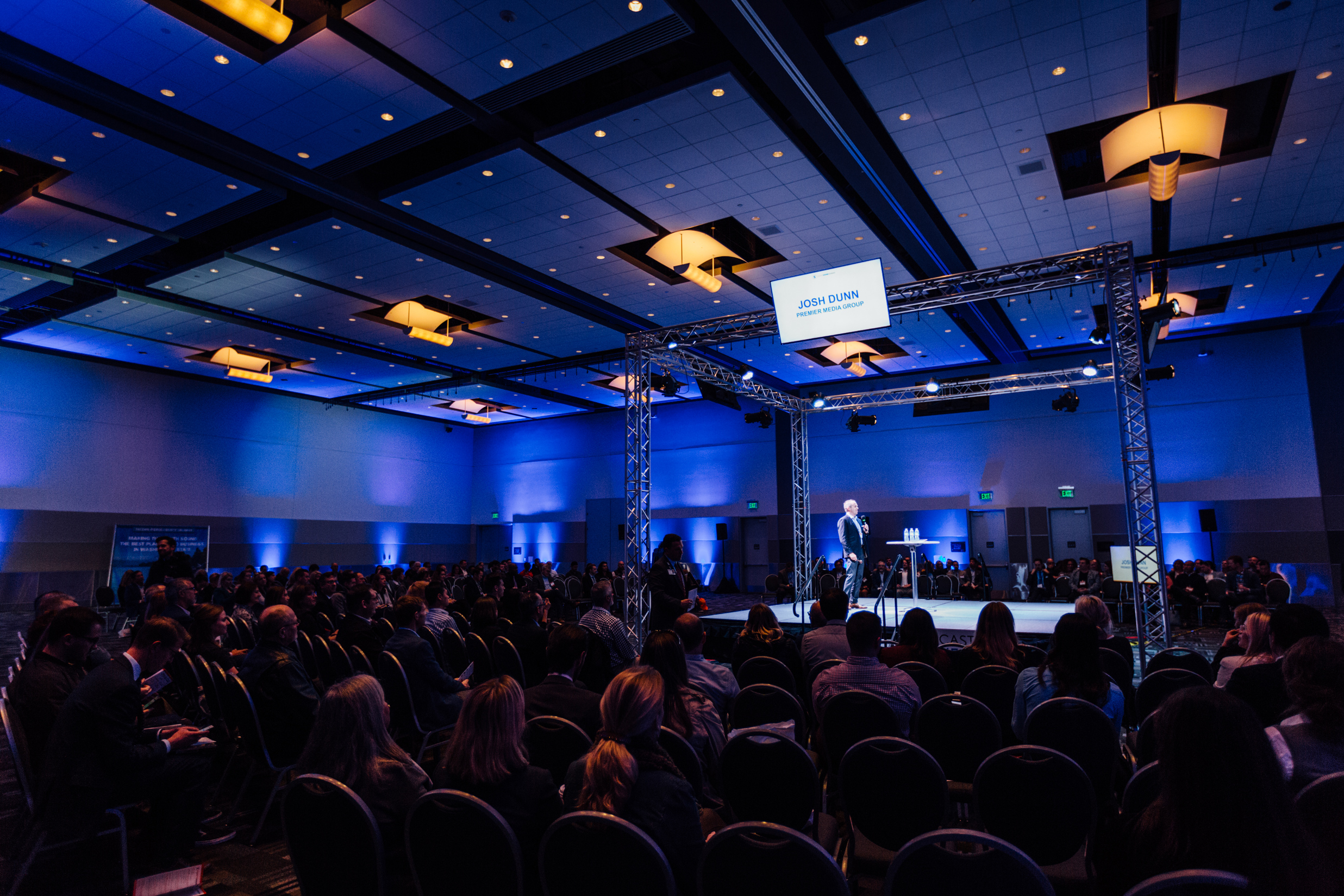
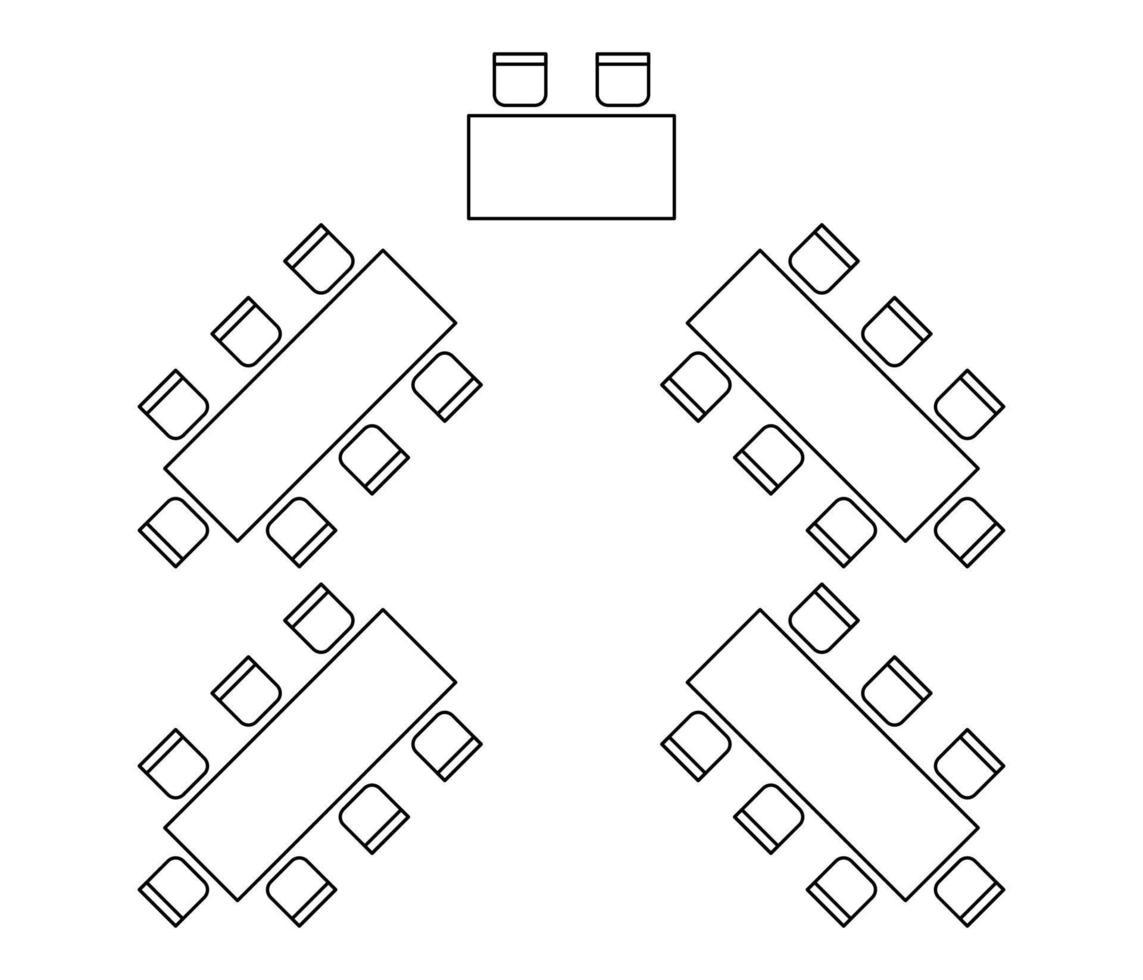
Traditional classroom setups are fine, but even subtle adjustments can give a room more impact. Enter the herringbone layout—a diagonal arrangement that angles rows toward the stage at 45-degree angles.
Why it works: This setup improves sightlines, encourages better engagement, and creates natural aisles that don't eat up floor space. Your attendees get clearer views, and you get to pack more people in without the cramped feeling. It's a win-win that transforms a standard conference into a more dynamic experience.
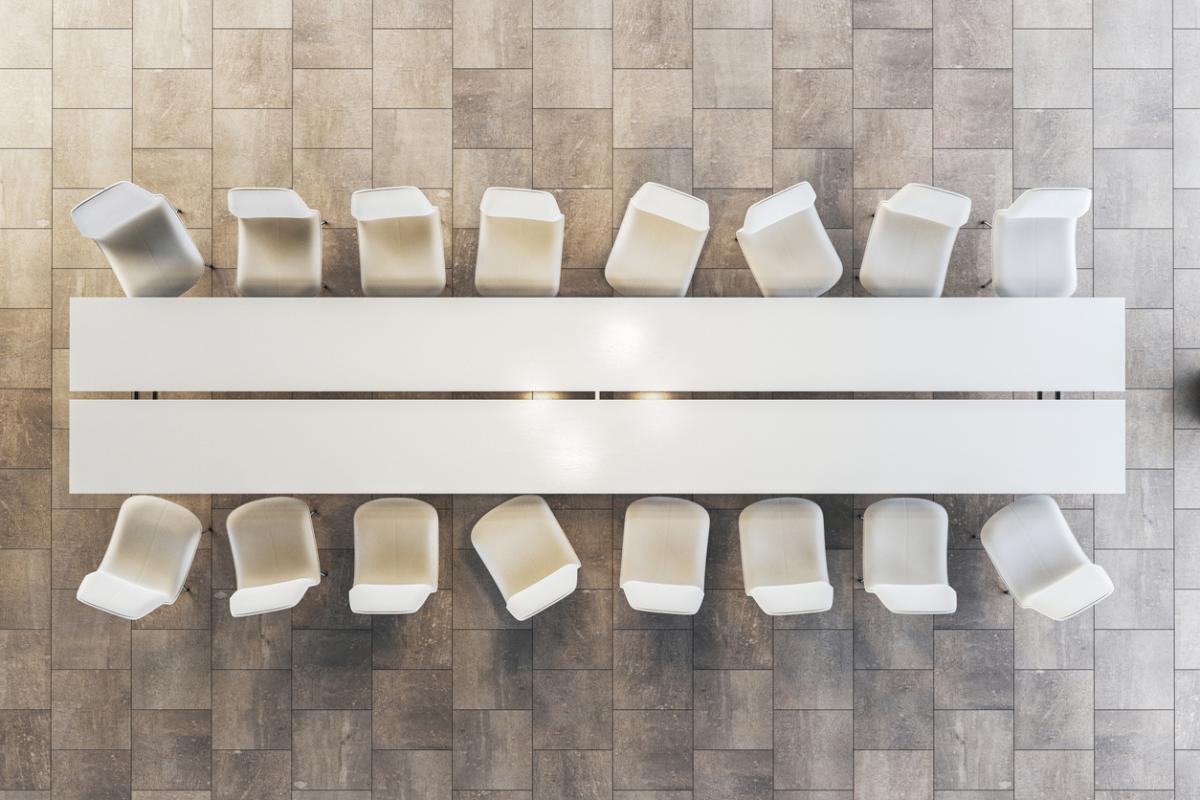
Round tables are elegant, but they're space hogs. If you're hosting a networking event or awards dinner, consider the imperial layout—long rectangular tables that seat guests on all sides.
The advantage? Imperial setups use space more efficiently than rounds while still fostering conversation. Plus, they create clean, dramatic lines that photograph beautifully. Imperial layouts can help you seat more guests while keeping the aesthetic sharp.
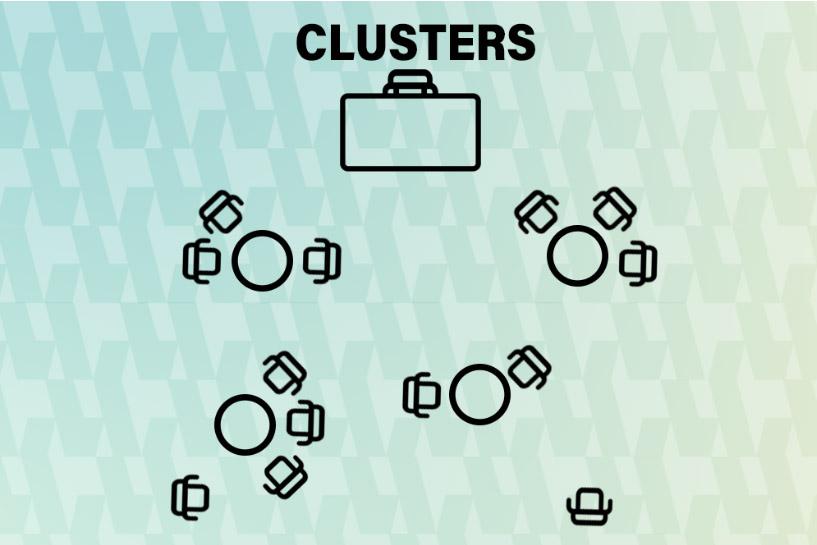
Tired of the banquet hall vibe? Try pod seating—small clusters of chairs arranged in conversational circles, often with low cocktail tables.
The payoff: Pods eliminate the wasted space of traditional rounds while encouraging organic mingling. They're perfect for networking sessions and team-building activities, creating intimate pockets of connection without formal barriers. Bonus: you can mix and match furniture heights to visually divide the space and add dimension.
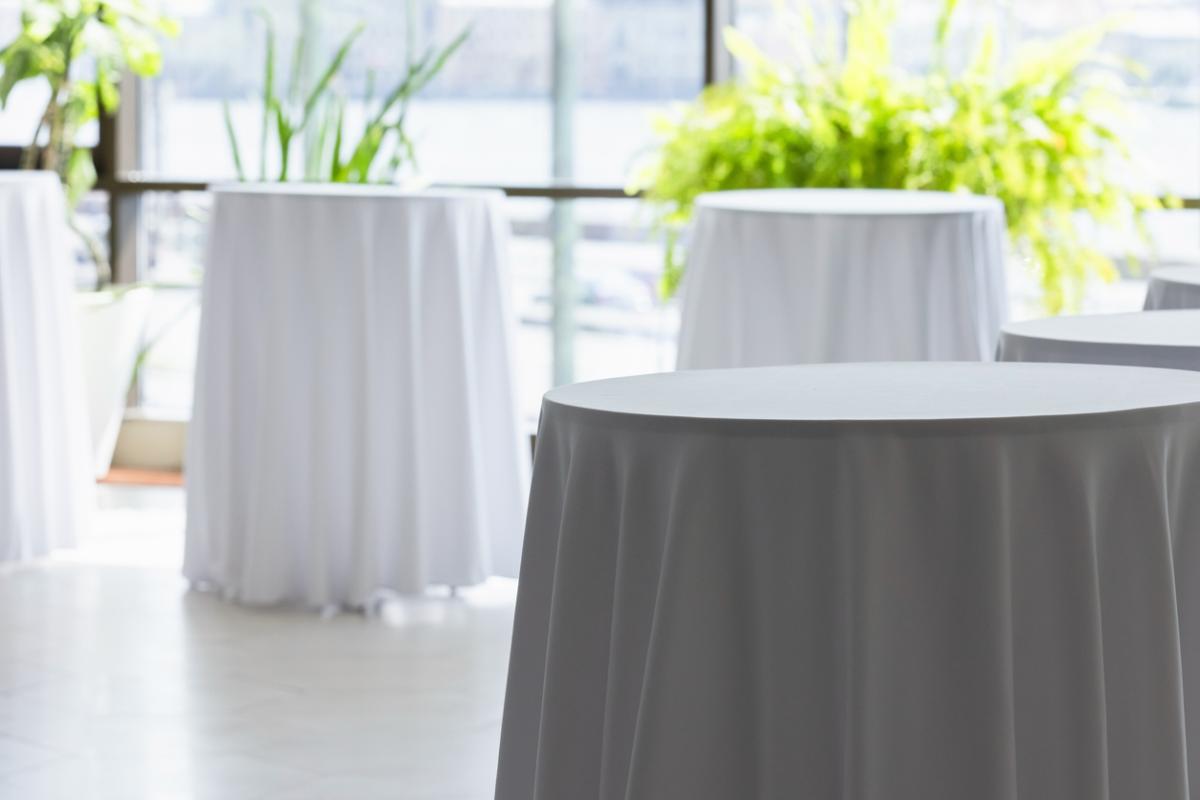
When floor space is tight, look up. Literally. Utilizing vertical space with tall floral arrangements, hanging signage, and tiered displays draws the eye upward and creates the illusion of a larger, airier venue.
Pro tip: Pair tall centerpieces with low bistro tables for cocktail receptions. This combo keeps the floor clear for movement while adding visual interest. Strategic lighting—think uplighting in corners or accent lights on key features—also amplifies the sense of space without claiming a single square inch.
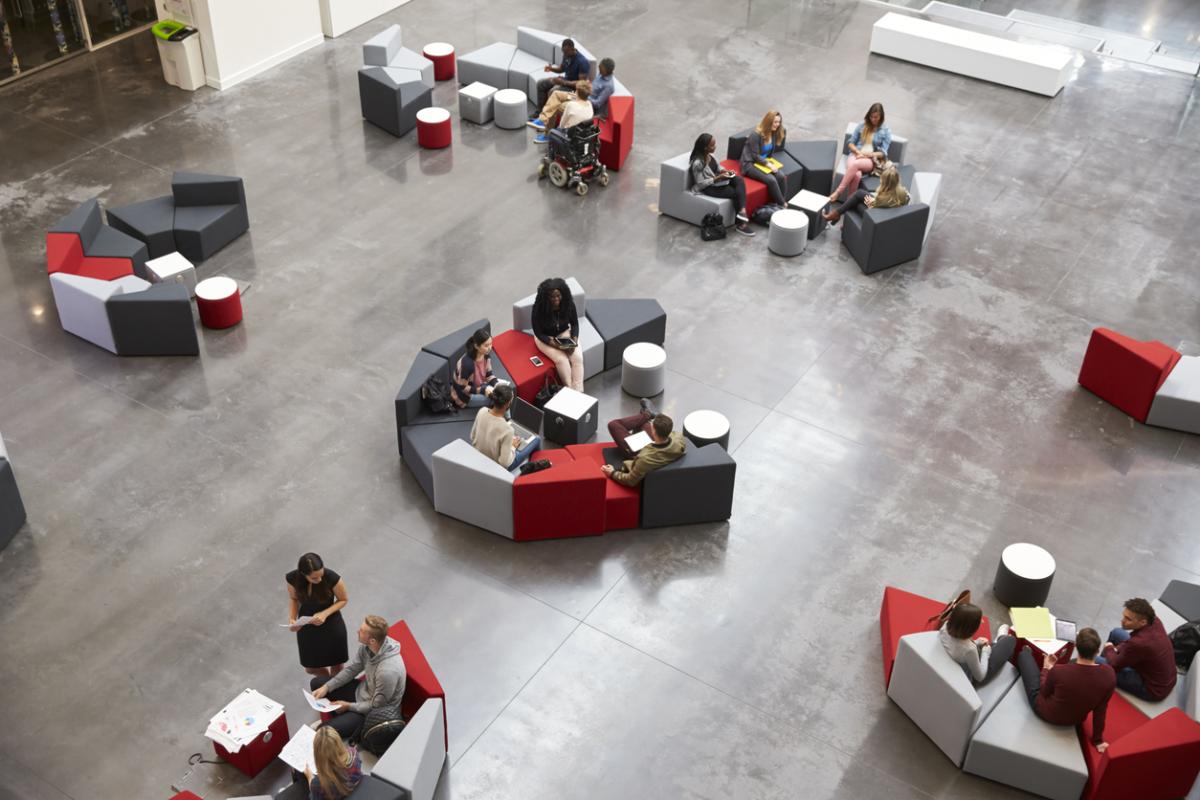
Flexibility is your best friend. Modular, multi-functional furniture—foldable chairs, nesting tables, mobile partitions—lets you reconfigure spaces on the fly.
Why it matters: Corporate events rarely follow a single format all day. You might need theater-style seating for a keynote, then transition to smaller breakout groups for workshops. Modular setups make those transitions seamless while maximizing usable space for each session. Plus, when furniture isn't in use, it can be stacked or rolled out of sight, instantly freeing up room.
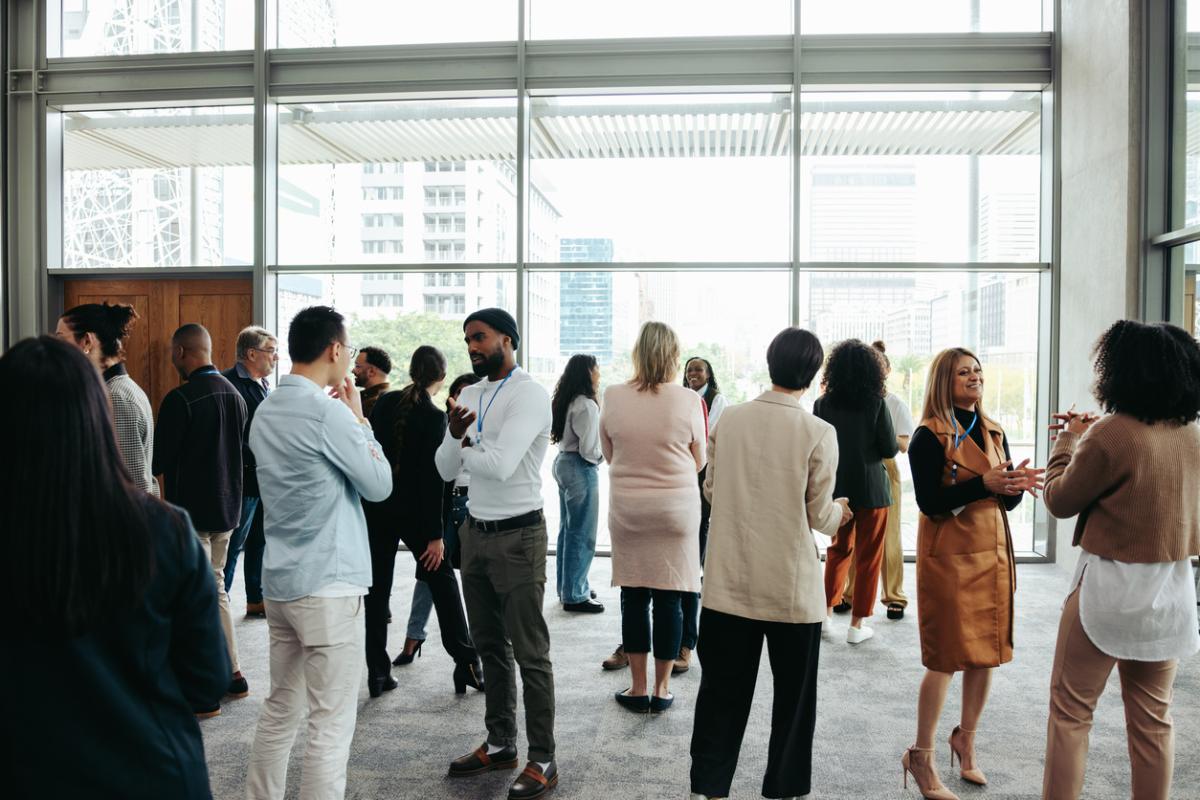
Sometimes the boldest move is to remove furniture altogether. Open space layouts with minimal seating encourage full engagement, movement, and networking—ideal for team-building events, workshops, or interactive product launches.
The strategy: If you're hosting an event where attendees don't need to take notes or eat a full meal, ditch the tables. Use strategically placed seating zones around the perimeter for those who need a break, and let the center stay open for presentations and activities. It's a breath of fresh air—literally—and it maximizes capacity like nothing else.
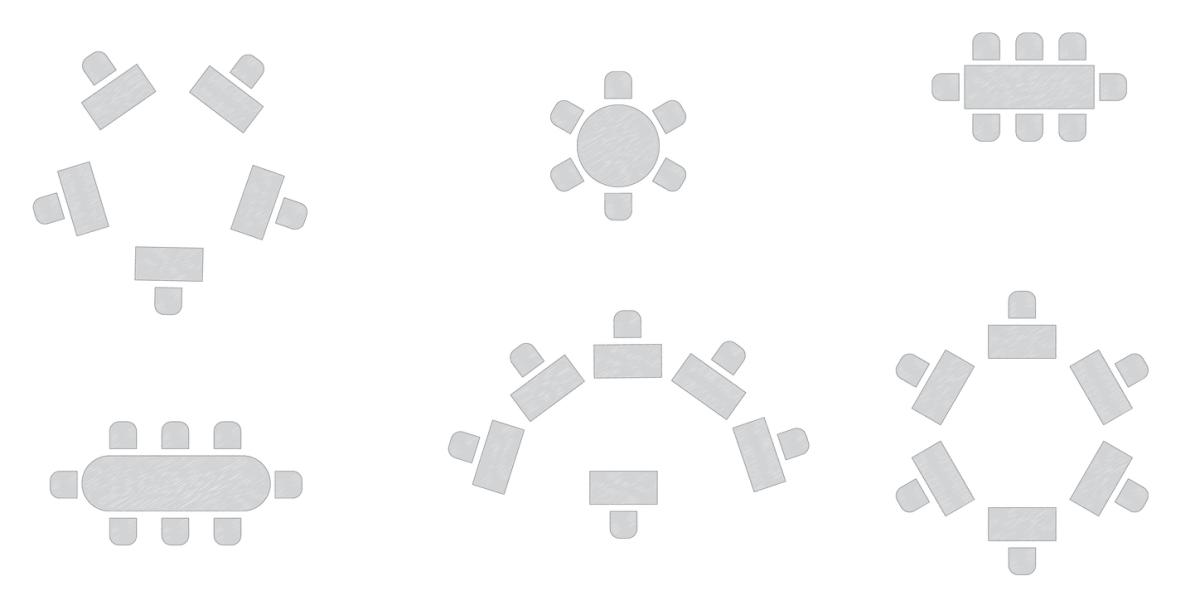
Can't decide between theater, cabaret, and lounge? Don't. Mixed seating arrangements combine multiple layouts in one space, catering to diverse attendee preferences and creating dynamic visual interest.
How to execute: Position theater-style rows near the stage for those who want a clear view, add cabaret tables in the middle for groups who prefer sitting together, and tuck lounge furniture in the back for networking. This approach addresses sight-line issues, accommodates different engagement styles, and—crucially—uses space efficiently by eliminating one-size-fits-none compromises.
Maximizing convention center floor space isn't just about cramming in more chairs—it's about designing experiences that feel spacious, engaging, and intentional. Whether you're planning a corporate conference, product launch, or awards gala at the Greater Tacoma Convention Center or any other venue, these creative room-setup ideas give you the tools to think beyond the traditional.